Showing posts with label beer history. Show all posts

Sunday, January 5, 2014

Spot update: Quite a lot of new things at Beer stop!

Beer stop really loaded up on some good brew very recently, because last I went I realized that i did not bring nearly enough cash with me!

In addition to STILL having cases and cases of bourbon county stout, they also have quite a few new treats......lets start off with the best first!
Hummmmmn, I wonder what this could be.....


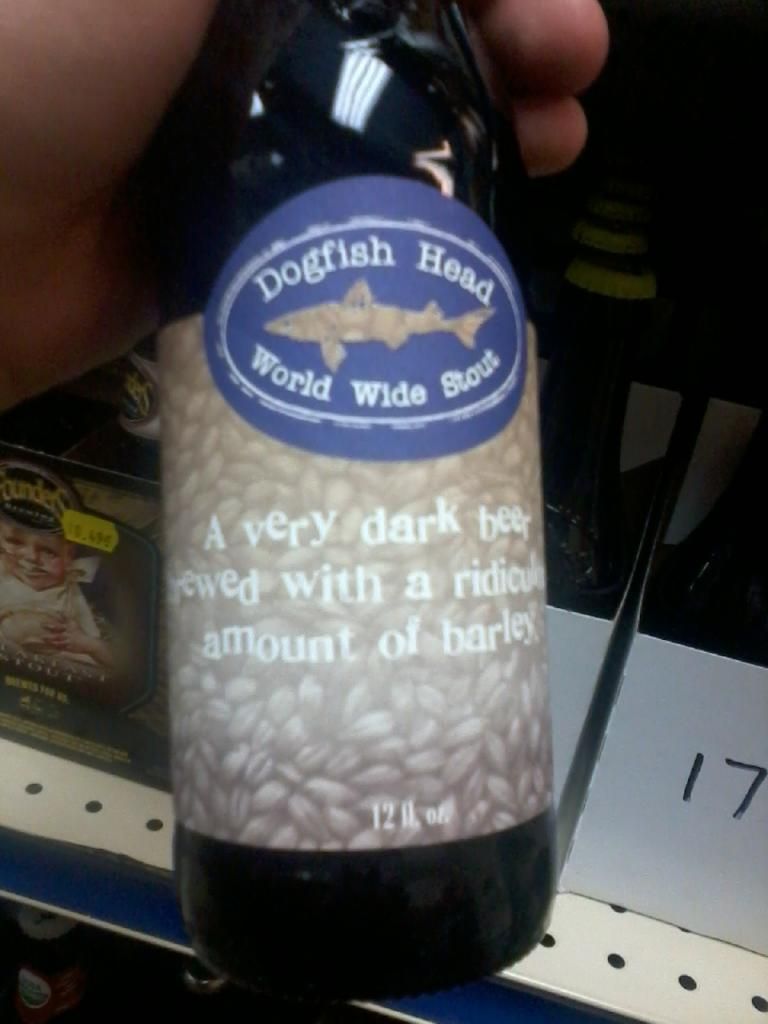
Yup. Its the god damn World Wide Stout
Anyone want to to hafsies? or Quarters?

  • dogfish head
    • World wide stout, 
      • Style: American imperial stout, 17%
      • rating: ratebeer(100\100), beer advocate (93\100)
      • personal rating: n\a
This is one uncommon beer, and i would say its the rarest Ive seen since 120 minute IPA in the store, or when they had a bottle of Utopias. An expsneive, but must have brew. Who knows how long it will still be available!

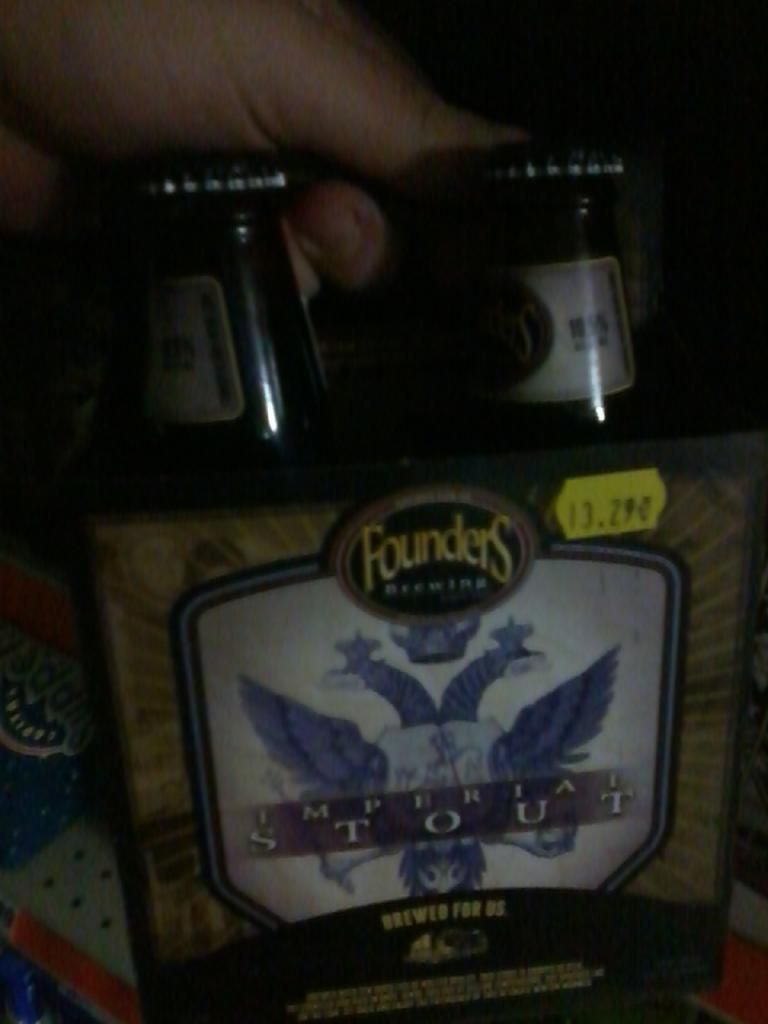
lets move on to another stout, but one that.s scaled back a bit....Founders Imperial stout!


  • Founders
    • Imperial stout, 13.29\4
      • Style: American imperial stout, 10.5%
      • rating: ratebeer(100\100), beer advocate (97\100)
      • personal rating: 96\100. An extremely dark, roasty, and rick imperial stout. A must try.

Lets move on to something a bit smokier, Stones vanilla bean smoked porter!


  • stone
    • Smoked vanilla bean porter, 7.49
      • Style: American porter, 5.9%
      • Rating: ratebeer (97\100), beer advocate (88\100)
      • personal rating: n\a
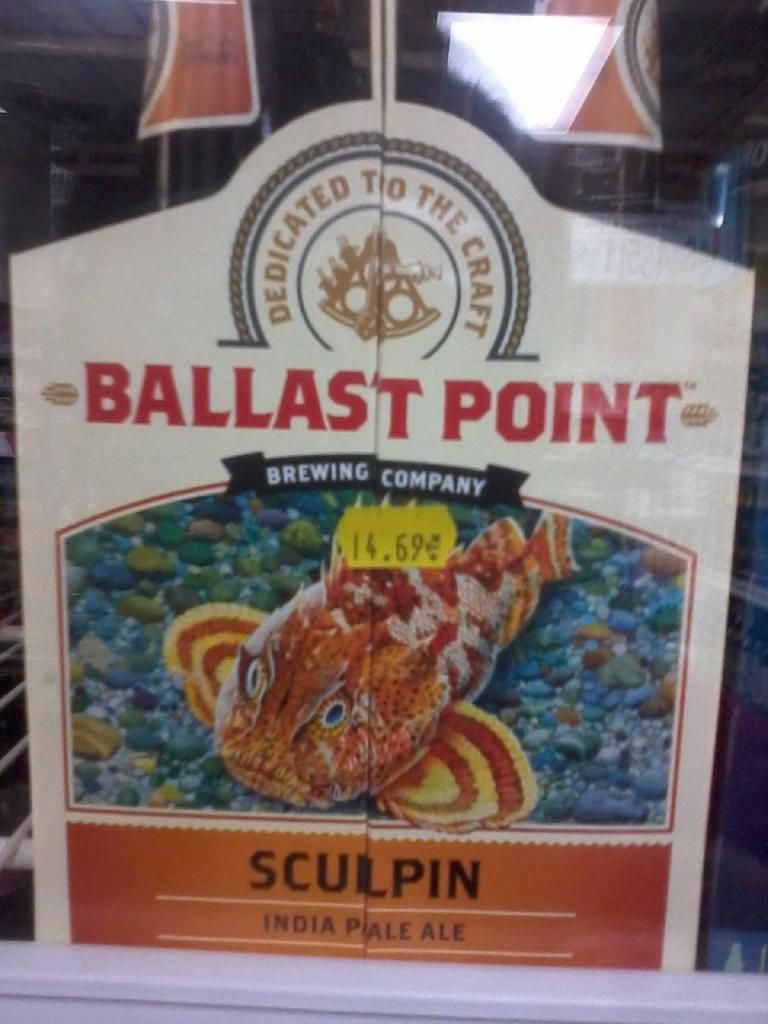
And now, here is a beer that I haven't seen in some time, The one and only sculpin.


  • Ballast point
    • Sculpin ipa, 14.69
      • Style: American IPA, 7%
      • rating: ratebeer(100\100), beer advocate (98\100)
      • Personal rating: I would have to say that this is one of the finest ipa's I had in 2013. not quite as good as dirt wolf, but it is damn close. A must have. Pay the extra 3 bucks and enjoy this 6 pack immensely. 95\100

And now just for fun, these fellows looked pretty nice as well............even if they are not as rare or in short supply as the above brews.

  • Terrapin 
    • Wake-N-Bake coffee oatmeal imperial stout, 12.99
      • Style: Imperial stout, 8.1%
      • rating: ratebeer(99\100), beer advocate(96\100)
      • personal rating: n\a


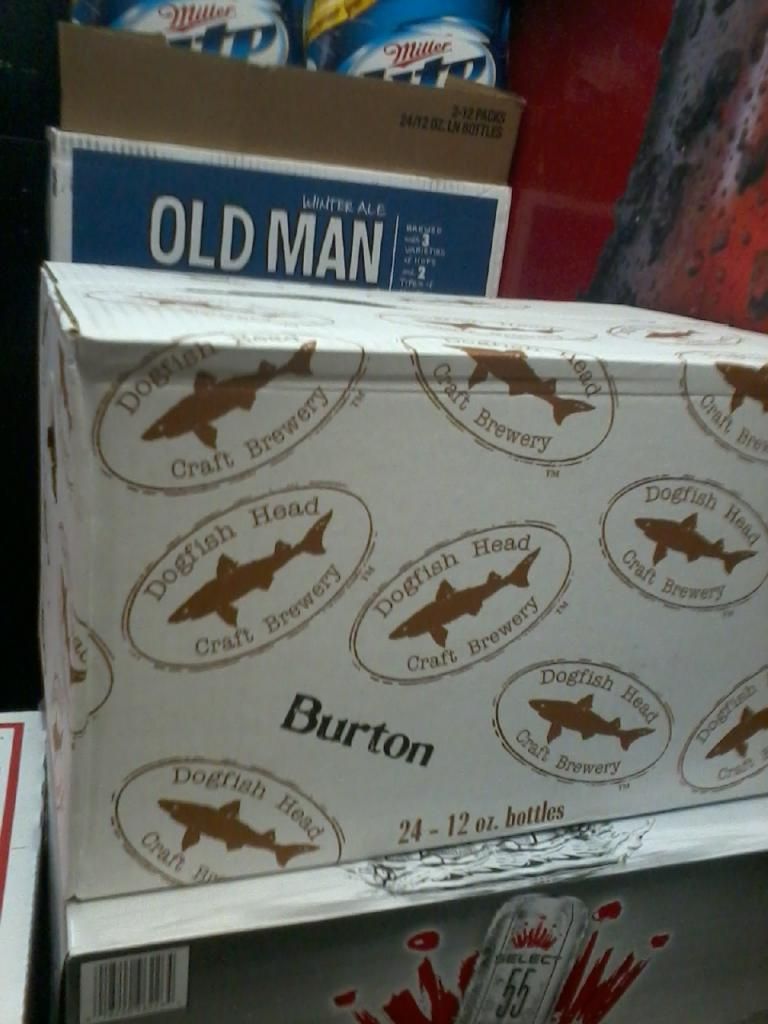
Not exactly super rare at all, but yea, they have plenty of this stuff. i just thought that the case box looked cool!


  • Dogfish head
    • Burton Baton, 14.49\4 ( I think)
      • Style: Imperial ipa, 10%
      • rateing: ratebeer(99\100), beer advocate(94\100)
      • personal rating: n\a
As you can see, their are a lot of nice choices at the store right now. more good ones than usual! I hope that I can decide what it is I'm going to do. I hope that you can do the same!

Cheers!


Thursday, January 2, 2014

Sam Adams Odyssey part 4 Nobel Pills

Sam Adams Odyssey part 4
Nobel Pills


  • Sam Adams
    • Nobel Pills, 1.99 12 oz
      • style: Czech Pilsener, 4.9%
      • rating: ratebeer (84\100), beer advocate (85\100)
      • personal rating: BA style
        • appearance: straw colored yellow. Very clear. 4\5
        • aroma: the soft refreshing aroma of noble hops. It is quite nice, 4.25\5
        • taste: I have to say, one of the better Pilseners I've had before. Hop forward with a stable sweet backbone. Light and easy to drink. Its hops can get a bit aggressive at times, but that is to style and I doubt anyone would have any problems with it. 4.25\5.
        • mouthfeel: Relatively thin, with a good boost of carbonation. Once again,very easy and nice to drink. 4.25\5
        • overall: I'm going to give this one a 4.25\5. I really cant fault it with much at all. I suppose its hopping could be done better, but that's a serious nitpick. Any ber could use a better hopping, and the hop flavor in this beer is its greatest strength, A great Pilsener to give a shot when you can.
          • BA average: (4.24\5)
          • personal score: 88\100
            • Super short review:Buy this beer! Its well worth it.


Style in focus:
Czech Pilsener

Love them or hate them, you cannot deny the importance the lagger has had on the face of beer. It changed the direction of brewing in the world, opened up new and larger market for brewers to target, and became (for better or worse) the brew of choice of the entire world and by the worlds largest brewers. And lager was “invented” in the Czech Republic. I use italics because it is absurd to say that anyone invented the style. Ultimately it was started by the unintentional bonus of storing beer in the cold seasons, which resulted in the selective breeding of yeast to act in a different way. This selective breeding is what really narrowed down what is today known as Lager yeast. To attribute that invention to any brewer is like giving credit to the farmer for inventing the egg. However, the Pilsner was most defiantly invented. And it was invented in the Czech Republic.

The territory that is now the Czech Republic has seen many hardships over time (such as being taken over by many waring nations) they have always maintained a strong history of brewing. Its this territory that saw the birth of the Pilsener. Much of the brewing was done by citizen breweries (Měšt'anský pivovary “burgher’s”), and one of these breweries did what many great breweries today do: they got a excellent brew master from another source to get their beers up to par. That is where Josef Groll enters the equation. The Bavarian brewer was brought in and used his knowledge of bottom fermenting yeast (first used in records in Bavaria) and the new lightly kilned malt (golden malt) to brew the worlds first Pilsener. It is because of this that the brewery was renamed Plzensky Prazdroj, or Pilsener Urquell (or Pilsener Original Source). It is from this that all forms of Pilsener originates from, including the main product from brewing behemoths such as Miller-Coors and AB-InBev (even if their products are quite far off from what was originally brewed by Josef Groll).
Exert from Beer Advocate:
The Czech Pilsner, or sometimes known as the Bohemian Pilsner, is light straw to golden color and crystal clear. Hops are very prevalent usually with a spicy bitterness and or a spicy floral flavor and aroma, notably one of the defining characteristics of the Saaz hop. Smooth and crisp with a clean malty palate, many are grassy. Some of the originals will show some archaic yeast characteristics similar to very mild buttery or fusel (rose like alcohol) flavors and aromas.
Exert from the BJCP

Aroma: Rich with complex malt and a spicy, floral Saaz hop bouquet. Some pleasant, restrained diacetyl is acceptable, but need not be present. Otherwise clean, with no fruity esters.
Appearance: Very pale gold to deep burnished gold, brilliant to very clear, with a dense, long-lasting, creamy white head.
Flavor: Rich, complex maltiness combined with a pronounced yet soft and rounded bitterness and spicy flavor from Saaz hops. Some diacetyl is acceptable, but need not be present. Bitterness is prominent but never harsh, and does not linger. The aftertaste is balanced between malt and hops. Clean, no fruity esters.
Mouthfeel: Medium-bodied (although diacetyl, if present, may make it seem medium-full), medium carbonation.
Overall Impression: Crisp, complex and well-rounded yet refreshing.
Comments: Uses Moravian malted barley and a decoction mash for rich, malt character. Saaz hops and low sulfate, low carbonate water provide a distinctively soft, rounded hop profile. Traditional yeast sometimes can provide a background diacetyl note. Dextrins provide additional body, and diacetyl enhances the perception of a fuller palate.
History: First brewed in 1842, this style was the original clear, light-colored beer.
Ingredients: Soft water with low mineral content, Saaz hops, Moravian malted barley, Czech lager yeast.


Well, their you go. Now you have all the information you will need to know about the Czech Pilsener. I hope that you manage to pick yourself up a Nobel Pills and judge for yourself. I am confident that you should enjoy it, assuming that its flavors are to your liking!


Prost!


Monday, December 30, 2013

Sam dams Odyssey part 3: Whitewater IPA

Sam dams Odyssey part 3:
Whitewater IPA


Once again, I'm worried about this one. Not because I think its going to suck...ohh no, its because I really want to try it! I love the idea of a white IPA, and if Sam Adams can do something proper, its an IPA. I also like the rest of the beers in this collection (hopology), so yea, I do have expectations about this one..........very different from the first two I reviewed.

But who cares. Lets just jump into this one! Afterwords Ill write a bit on white IPA (the inspiration for this beer), with my information being taken from the book “IPA”, by Mitch Steele.


  • Sam Adams
    • whitewater IPA
      • Style: American IPA, 5.8%
      • rating: ratebeer (89\100), beer advocate (80\100)
      • personal review: BA style
        • appearance: You can clearly see the inspiration for this beer: it has a very present cloudiness to it that at a first glance would make you believe that it is a wit. When poured it had a very small head, but that rapidly disappeared. Despite that, it still looks great in my Scottish glass. 4.25\5
        • aroma: This is where the beer really shines. It has a lot of apricot and floral\fruity hop aroma. Not much spice that I can tell, but it really smells amazing. Full points. 5\5
        • taste: wow, this one really shoots for the hops. It flavors can be described as being very hoppy neutral bitterness. Very resinous and piney, with some bitter orange flavors thought the entire beer. It does start off as being somewhat sweet, but the hops really make you forget that. That's the main problem I had with the beer. Its hops covers up a lot of the witbier character that the beer might had had. I like it, but its not what I wanted. 3.5\5
        • mouthfeel: This beer has a nice smooth mouthfeel, with just the right amount of carbonation. I like it a lot. 4.5\5
        • overall: In some ways, this is a great beer......but it really missed the point. The point of a white ipa is to blend the flavors of a wit with that of an IPA. This one pushed the hops too hard, and it just came off as an American IPA instead of a white one. Still, its great American ipa! A good choice that will really surprise people who have no respect for SA. I give this one a 3.75\5 overall. If your looking for a beer with a unexpectedly large amount of hops, look no further.
          • Final review: BA(3.99\5), personal (84\100)
          • Its no White IPA, but it is a cool American one. Good from start to finish. Will have again.

    Style in Focus: white IPA


This beer may not be a so called “White IPA” (even if it did get the appearance and aroma correct), but what exactly is a white IPA? It's a style so new that its not even in the Encyclopedia of beer, and I had to find it in a new beer “IPA”, by Mitch Steele (which is a great read for anyone who wants to learn more about all IPA's). A very new style, in fact the newest style in the book, it has its origin with a collaboration brew. In 2011 Deschutes and Boulevard brewing companies worked together to form this style in two separate attempts. The stye is made by fusing the IPA style with that of the Belgian Witbier. The beer was made like a traditional wit except it was made stronger (7.4% abv) and aggressively hopped like an American IPA. Since then many breweries have made their own versions, some vouching for traditional wit ingredients and others going for more exotic ingredients like peppercorns, kumquats, and Brettanomyces fermentation (among other things).

The main things that most people can agree on the type of hops that they use. They favor citrusy and fruity hop varieties to play off the Belgian yeast character and spices. That is primarily why whitewater IPA is not a white IPA. Its hopping is too harsh and forward: it covers up too much of its Belgian character and spice (which mostly defines the beers aroma vs its taste). Hops used for white IPA's include Cascade, Centenial, Citra, and Galaxy.
I wish you a Merry Christmas
And a Happy New Year
A pocket full of money
And a cellar full of beer!
     — Irish toast

Saturday, December 28, 2013

Sam Adams odyssey part two: Sam Aadms Light

Sam dams Odyssey part 2
Sam Adams Light


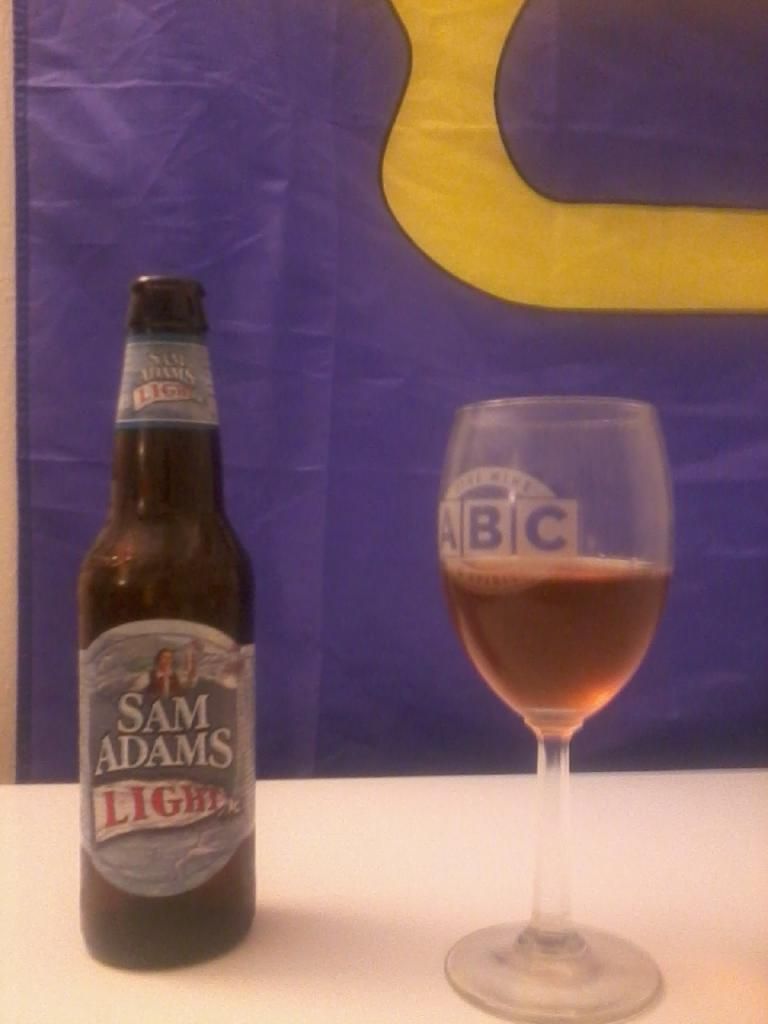
beer is sitting over my kegerator, and next to be beer flag


On my last review I tried the blueberry wit, and I expected that I would not care for the brew. I was wrong, and found it to be a decent brew. Now this is the one beer from Sam Adams that I have some of the least expectation for (Cherry wheat is the one that I have the most Dredd to try, but we will cross that bridge when we come to it). For this beer, I will be treating it like a light beer, aka comparing it to the other light beers I've had in the past. As a result it may have a high rateing, but just remember, this merely reflects its rating in its weight class.

Because of that, it might get a decent review. I have no idea. I really have never had it before. But yea, enough talk! Lets get started

  • Sam Adams
    • Sam Adams light, 1.69, bottle
      • beer style: light lager, 4.3%
      • rateings: ratebeer(16\100), beer advocate (75\100)
      • personal rating: BA style, followed by a overall x\100
        • appearance: This beer actually has some color to it. A very light amber coloration distinguishes itself from its other light brethen, with no real head forming in my glass. Might had been my extra careful pour. Overall not bad. 4\5
        • aroma: Their really isn't anything here that I like. It really just smells like your typical light lagger, with maybe some kind of odd hoping, but I cant place it. Even so, I really don't care for it. I was kinda hoping for a nice load of hop aroma. 1.5\5
        • taste: moment of truth.............and...............you know what, its really not that bad at all! Extremely neutral, light, with few flavors backing it up. Very grainy malt body dominates the flavor. The Trader Joes pilsner had far more hop characters to it, but then again, this is a light beer. Its not suppose to have a lot of hop character. Compared to Bud light, or platinum, seriously, I give this one a 4\5
        • mouthfeel: light with a heavy dose of carbonation, making it very spritzy and covering its very light body. 4\5
        • overall: This beer really was not made for me, but I'll be honest, I don't hate it. Id be happy drinking it for free at a friends house or at a party. Its easy to consume, and is not offensive at the least, and does count as a light lagger. That's impressive, as to make a light lagger inoffensive is damn hard. After drinking the entire glass, my final rating is............. a 3.75\5. Its not bad at all. I cant say that I like its aftertaste very much at all, but overall, the beer really is ok..........especially for anyone who wants to indulge the fantasy of a “diet beer”.

Overall, Id be happy to play a game of beer pong with this beer!
BA rating (3.45\5), overall(82\100)
Remember the rating is scaled against the light lager category!

Beer style in focus

Now that the review is over, lets look at some of the history of light beer (information gleaned from the Oxford encyclopedia of beer, section "light lagers"). Light beer is defined as any beer that has less caloric content than your standard variety of beer. As a result most of these beers are brewed to have lower levels of alcohol and malt sugars (less alcohol and final remaining sugars mean less calories). The FDA classifies any beer that contains 33% less calories than a standard offering as being light. In a time of health contentious individuals (and cost sensitive consumers), combined with some clever marketing, light beer has taken the largest market share of any variety of beer on the planet.

Their are four ways of making “light beer”. The first is simply to reduce the grain bill of an original recipe. The second is to sell the beer in smaller bottles so it contains fewer calories. The third way is to employ a longer mash time, which will result in a greater amount of fermentable sugars and a lower body. The beer is then diluted with water. The fourth way is to use exogenous brewing enzymes in the mash to break up a great quantity of starches into fermentable sugars. The final product is then diluted with water, and light beer is the final result.

Because light beer by definition has a very low amount of malt sugars and hop character, brewing defects and off flavors will be very noticeable in the final product. This means that near-perfect brewing is required to produce such beers, often requiring a detailed understanding of brewing science and a high-tech brewery to manufacture. As a result, it is actually quite difficult to produce such beers properly.

The third and fourth methods listed above are used primarily to produce most of the beer in this category, and has its origins in Coors light which was first introduced in the 1940's. It was discontinues before WW2, but it was not the end of light beer. The beer saw new life in 1967 with the release of Gablinger's diet beer. The beer was created by chemist Joesph Owades (and was produced by the Rheingold brewery). The beer was not a success, but the brewery Meister Brau responded by making their own line of light beer. Miller took over the brewery and re-branded it as miller light in 1973. Soon Coors relaunched their Coors light brand in 1978, and Bud Light was soon to follow in 1982. 8 years later Bud Light was the best selling beer in the world, and it has largely stayed that way since. Each one of these big three are very similar, but insist that they have some house uniqueness that distinguishes themselves from the other. The lightest beer to be made in this category was low carb beer that used a generous portion of exogenous brewing enzymes to leave very, very little final sugars in the beer. Marketed as low-carb beer, it had a strong early response, but sales slumped back heavily due to its weaker taste and a overall return to standard light lagers. Today it holds a very small portion of the style's market share.

Despite the difficulty of their production and distribution, light beers have dominated the market. I would say this is due to the offering of large bulk beer purchases at lower prices, effective marketing, low caloric content, and its 'un-beer like” flavoring. Time will tell if Light beer will continue to dominate the market as it has since the early 90's

now you know!


Anyho, I think that just about covers this posting. I was very surprised to find a light style that I could enjoy (for what it was) and doubt that Ill find another one that really fits the bill. I think that Id still prefer a Trader Joes Pilsener or a Narragansett to this (for the price). But hey, for a beer with few calories, it does the job better than any other.

A glass in the hand’s worth two on the shelf—
Tipple it down and refresh yourself!
     — Anonymous